Wanting to explore the potential relationships the children might develop with the cacti growing in the TRU hills, I am trying to create opportunities for them to interact with the plants. As an internship student, I rarely have the chance to visit the mountains with the children and interact with the cacti. So, I thought, could I dig up a few cacti, plant them in pots, and place them in the daycare for daily interaction? After the internship, I could take the cacti home to care for them, so as not to burden the daycare teachers.
When I shared this idea with Cory (my course professor and internship teacher), he cautiously advised against bringing the cacti back to daycare. Instead, he suggested taking the children to explore areas where cacti are found. He reminded me what the underlying purpose behind this: is it to teach the children about cactus cultivation?
My teacher’s disapproval prompted me to reflect on my approach—what went wrong? First, why did I have that idea about taking away cacti? Cacti are practically everywhere on TRU hills; a single walk there often results in shoes with clinging cacti. Besides, cacti aren’t particularly appealing, so it’s unlikely anyone would take them. Taking several of them wouldn’t affect their ecology. But then I remembered the Indigenous view of land, the reciprocal relationship between people and the land. If you take something from the land, you also need to give something back. So I revised my thinking and wondered if I could invite A cactus to leave the hill and come to the daycare, then return it to the hill after the internship is over.
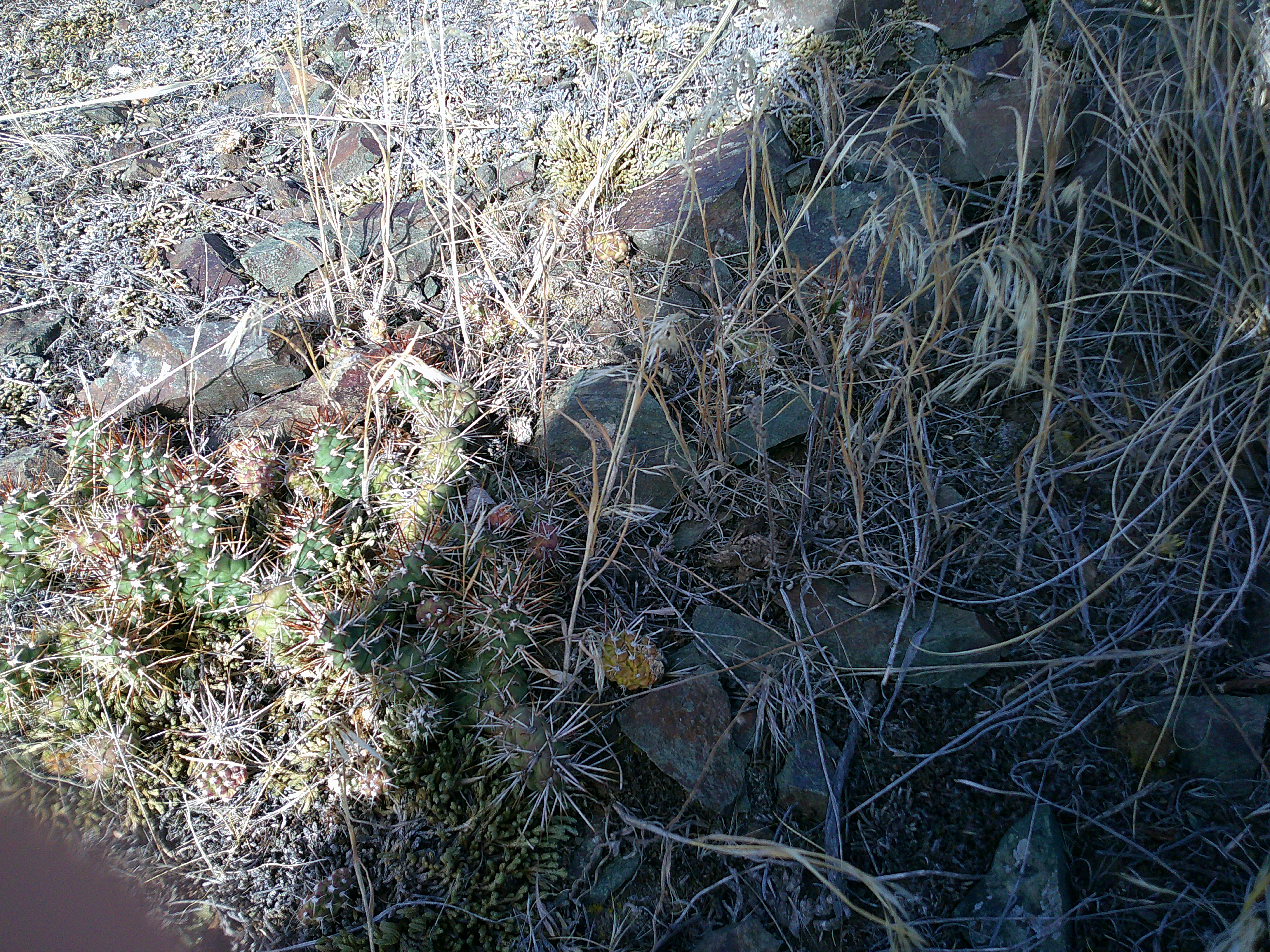
I then reflected that this planting idea was more like my own personal intention (although this idea is inspired by observing the children interacting with the cacti), rather than their own interests or choices. So, I decided to leave choices to the children to see if they were interested. I discussed this idea with Kim (my daycare mentor) and received her support. I decided to lead a small group of children on a cactus expedition to TRU hill.
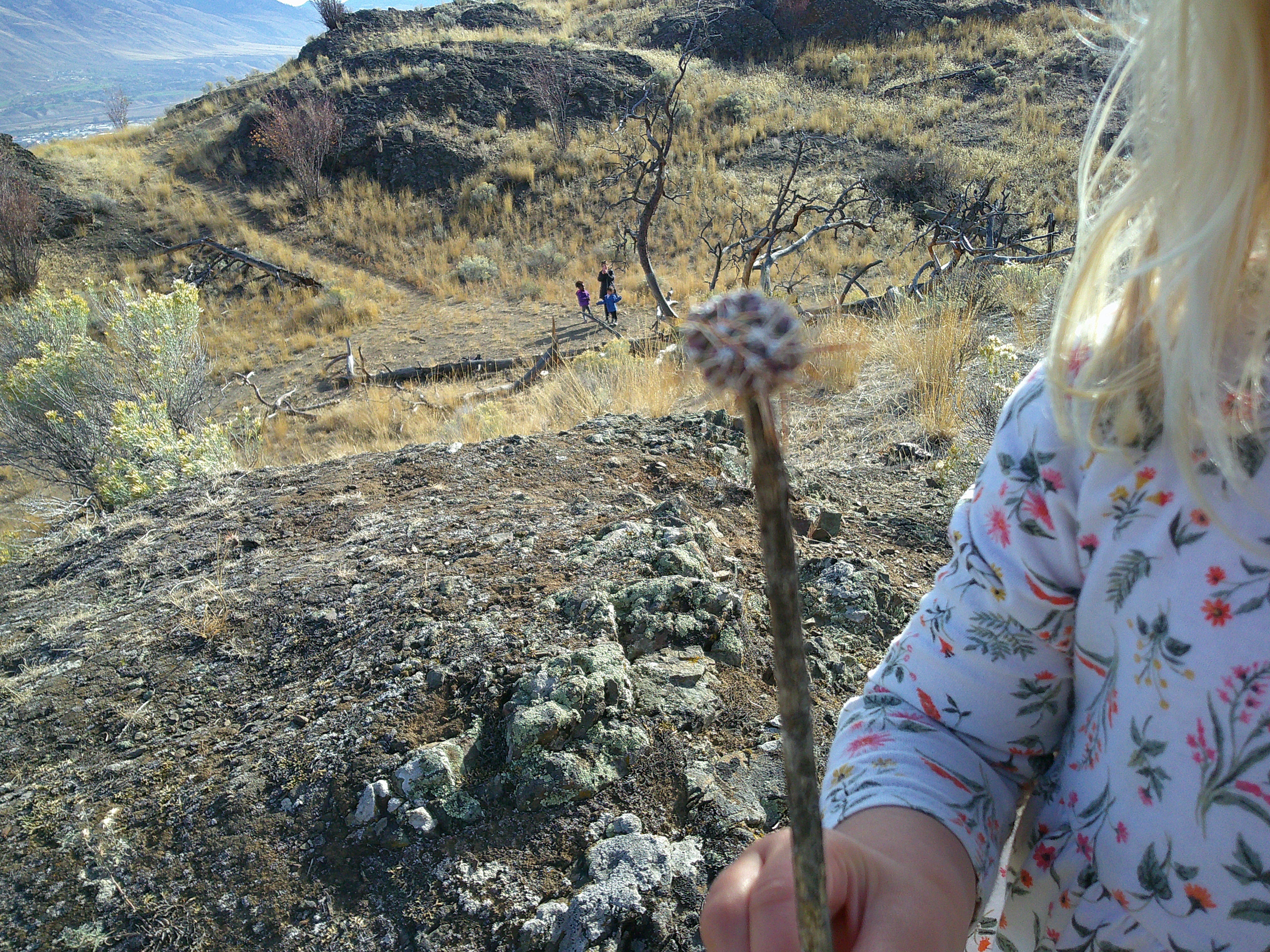
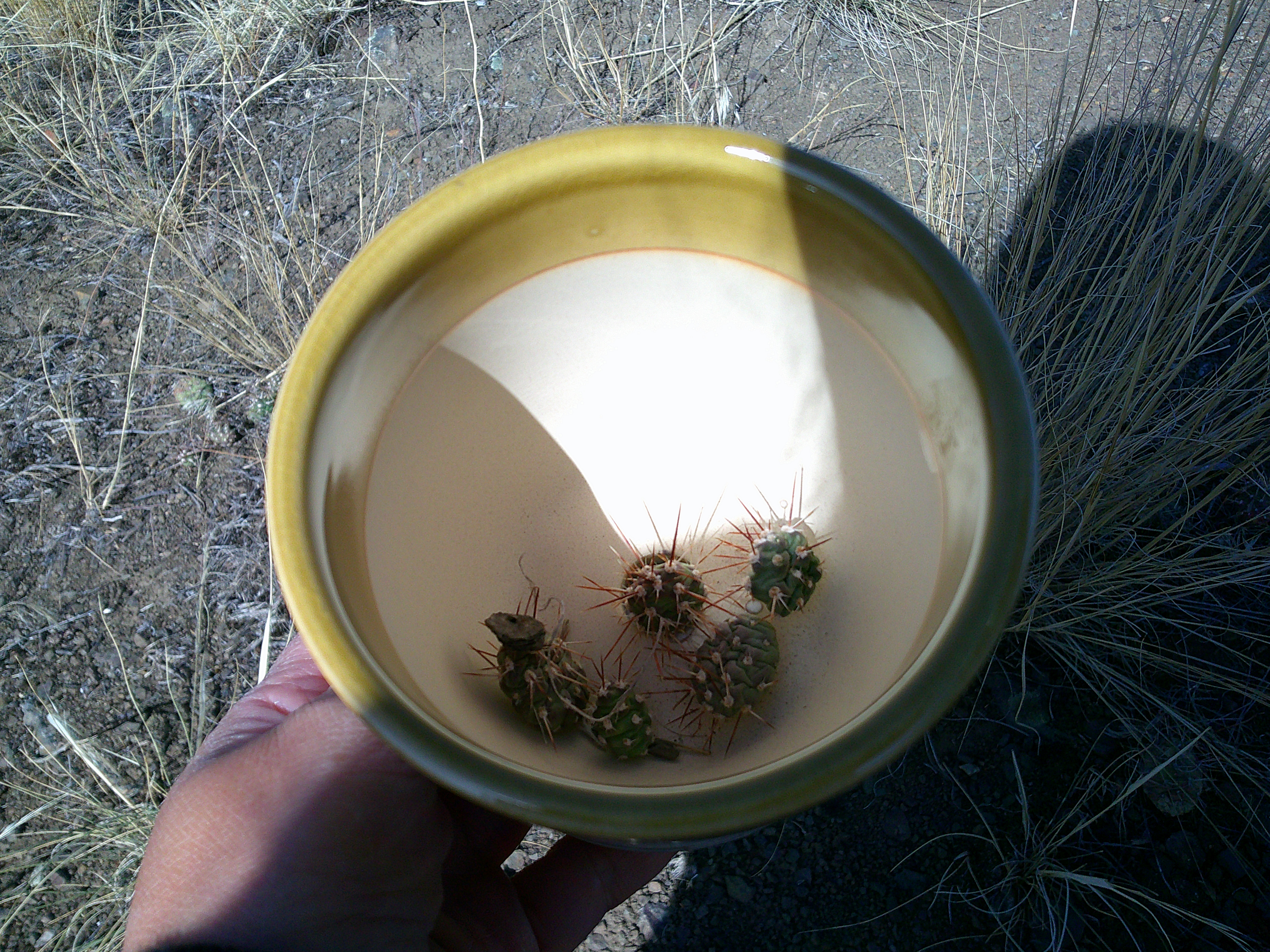
Before leaving daycare, I took out the small flower pots I’d prepared and told the children we’d explore cacti today and decide whether to bring one back to daycare. Later, I realized that because I’d overemphasized the cacti as the purpose of the hike, the children weren’t excited about it at all; the topic of cacti made them feel overwhelmed. When we arrived at our destination, none of the four children wanted to go to the top of the hill to find cacti, opting instead to stay at the pirate ship midway. I told them I was going to say hello to the cacti, and Lana offered to join me. We found numerous cacti at the top and crouched down to take photos. Just then, Everly came up and expertly picked up a cactus with a small stick. She calmly turned and headed back down the hill. Lana, following her, tried to pick up a cactus with a stick, but accidentally got pricked and quickly left the hill top. When I returned to the pirate ship midway, Kim then reminded me that I had a few cactus stuck to my shoes. I sat down and counted them—there were five! With the children’s help, I removed the cactus from my shoe and placed it in the pot. I asked if they wanted to take one back to daycare. The children remained silent and consciously moved away from the cactus. Kim said it seemed the children weren’t interested in planting it, and I could decide for myself whether to take one back. Then I decided and said to the children, “Let’s take the cactus back together!” So we returned the cactus from pot to the top of the hill.
Reflection:
I intended to create an opportunity for the children to further explore the relationship with cacti, but the approach seems contrived and unnatural. Even during the mini-meeting with the children before the trip, I should have treated it like any other normal hike, deemphasizing the cacti and allowing the children to encounter them in their daily lives. In this regard, I understand Cory’s objection and Kim’s initial hesitation.
But there were also some small gains. For example, when we were returning to Daycare, other teachers saw us and asked, “How was your trip with Cactus?” This shows that the Cactus topic has attracted more attention.
Jalisa, one of the four girls, initially showed resistance and fear toward the cactus during the outing. Later, while reading the Juniper book with a teacher after naptime, she noticed a picture of a pirate ship (a dead tree on TUR Hill) and asked why there were no pictures of cacti. When she eventually found an image of a child holding a cactus, she expressed that she wanted one too. This shift suggests that, over time and through different experiences, the cactus came to represent something more for Jalisa—no longer just something frightening.