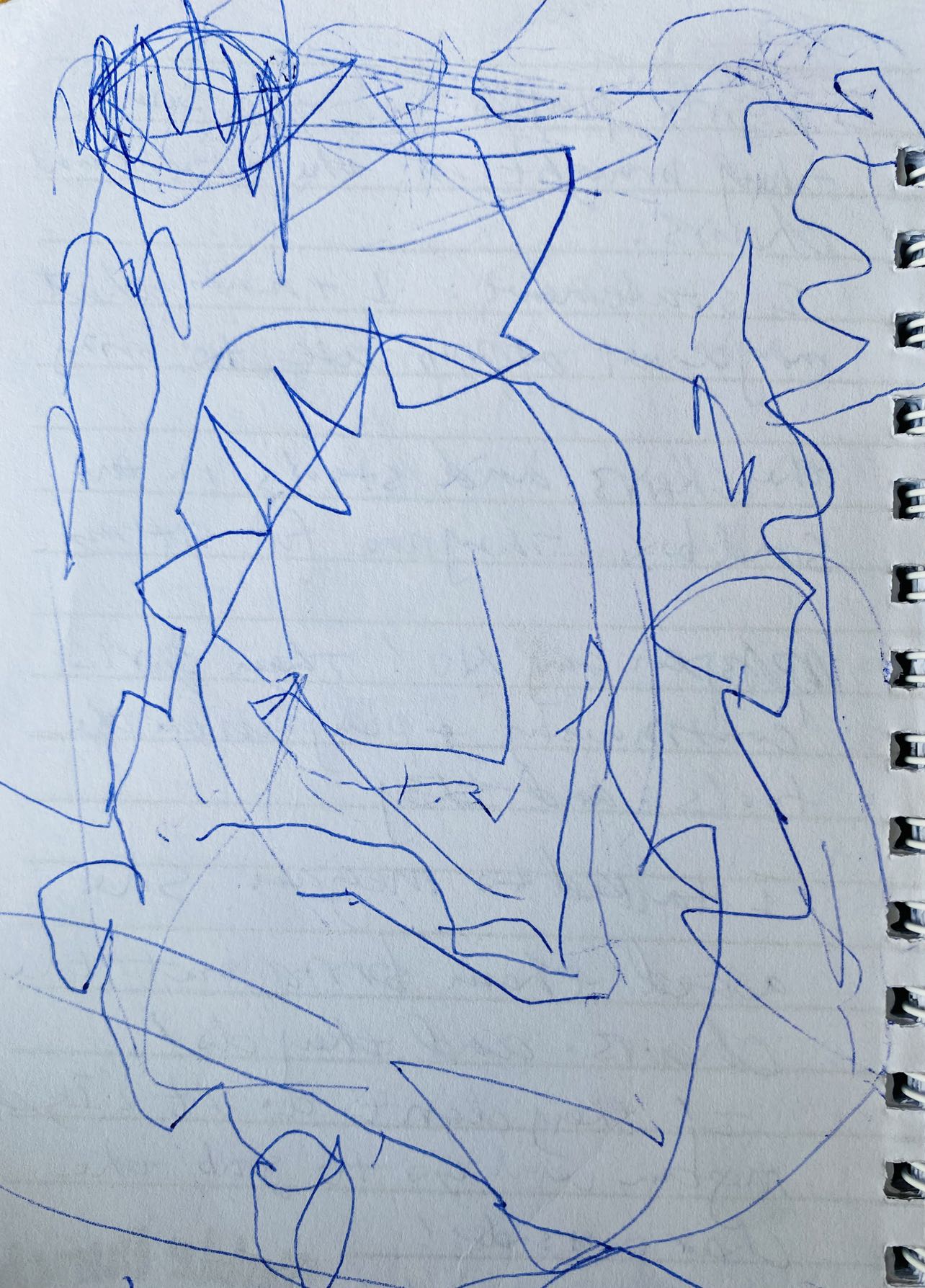
To make it easier to record my thoughts and observations during my practicum, I keep a pocket-sized notebook in one pocket and a retractable ballpoint pen in the other. Most of my day is spent with the children in the daycare yard. One day, as I took out my notebook and sat on a wooden stump to write something down, the youngest child in the class, Maxine, came over. She stared at my pen and asked, “Can I draw?” I handed her the pen and gestured that she could draw on the back of the page I had just written on. From then on, whenever Maxine saw me sitting in the yard with my notebook, she would come over and ask, “Can I draw?” It became a small, special interaction between us.
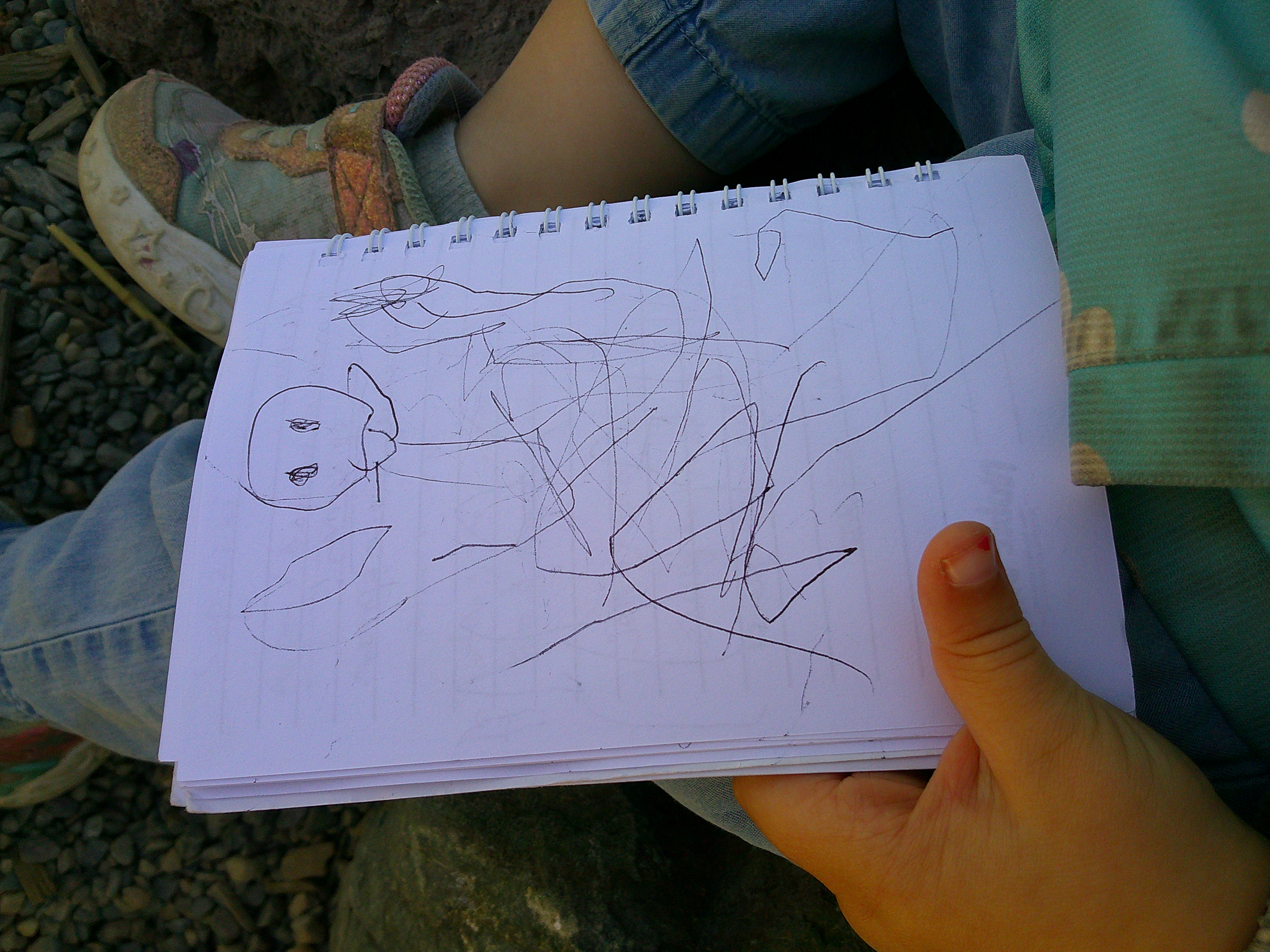
Another day, while Maxine was drawing on the back of a page, another girl with the same name—five-year-old Maxine A—came by. She politely asked, “Can I draw when she is done?” I gladly agreed. When it was her turn, she drew a picture in my notebook (Picture 1) and described it:
“It’s a Pirate Ship. Here are hills. These are cactus. And this is me by the Pirate Ship.”
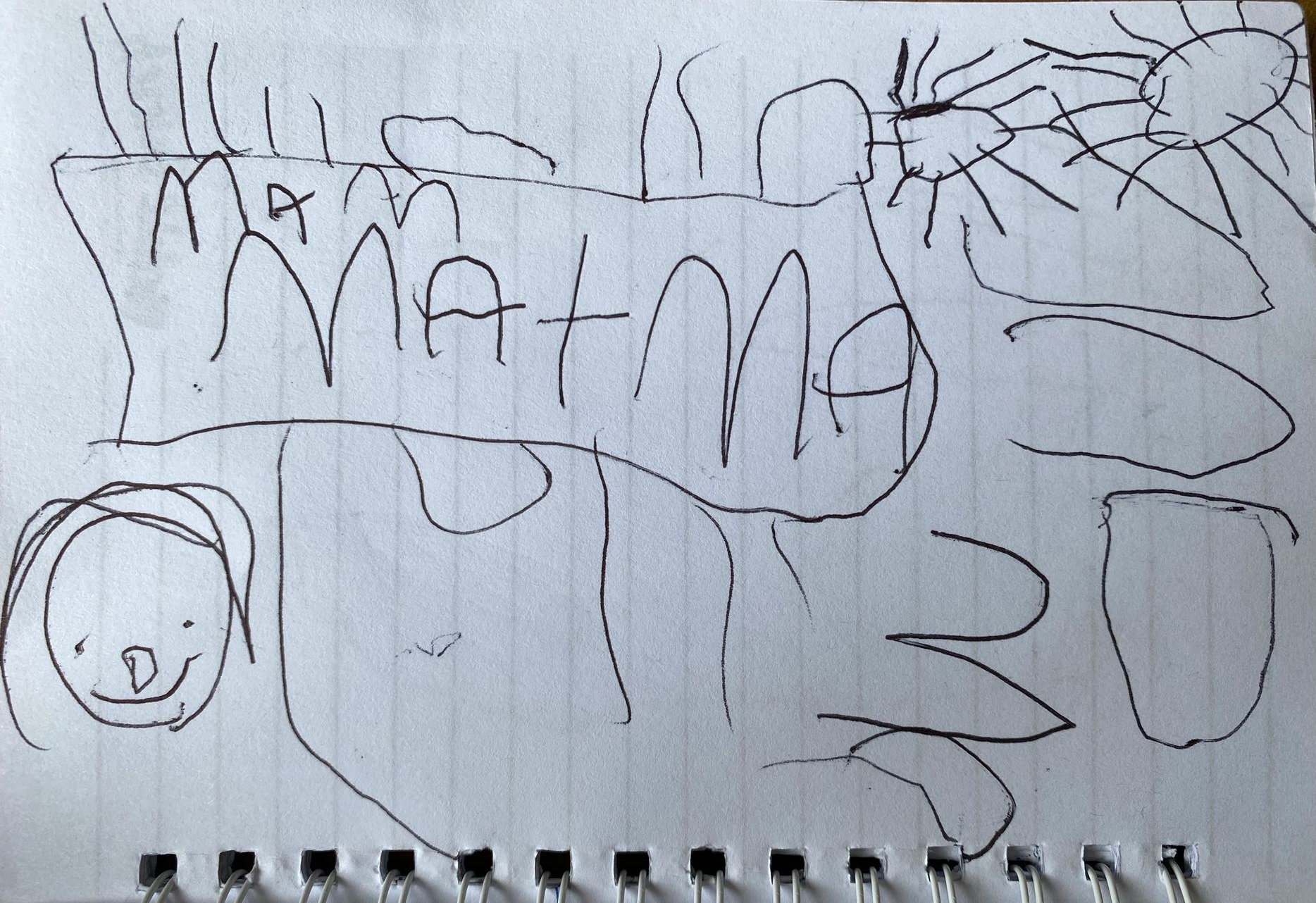
The “Pirate Ship” she mentioned is actually a fallen old tree on a hill near the daycare. Teachers and children often go there to play and explore. On the hillside around the dead tree grow many cacti. The children are both curious and cautious about them because the tiny cactus spines easily stick to shoes or pants and can be painful to remove. Their reactions to encountering a cactus vary: some cry from the sting and avoid cacti afterward, while others have learned to deal with them calmly, using a stick to remove them without fear. Clearly, Maxine A belongs to the latter group. When I asked her, “Are you afraid of cactus?” she replied confidently, “No.”
I became curious about why Maxine A chose to draw a picture of the Pirate Ship and cactus rather than something else. Coincidentally, observing the children’s relationship with the hillside cacti had been one of my recent focuses. Moreover, I want to explore what the children are currently interested in and thinking about. Therefore I wonder if inviting them to draw and talk with me might reveal some clues.
So, whenever I sat down in the yard, I began inviting the nearby children to draw and chat with me. My questions were:
Q1: “Can you draw a picture for me?”
Q2: “Can you tell the story of your picture?”
Most of the children gladly accepted my invitation and eagerly described the stories of their drawings. Some initially declined but changed their minds after seeing their friends drawing. One child simply said no and went off to do something else. The following pages of this notebook include all of their drawings and stories. Usually, when the children draw in daycare, they imagine their artwork as gifts for their families and place the finished drawings in their backpacks. But this time, they were aware that I had invited them to draw and that their drawings would stay in my notebook. Their creative expressions—both visual and verbal—emerged through our interaction. For me, this felt like a small experiment in listening, communication, and mutual expression built on a foundation of trust between us.
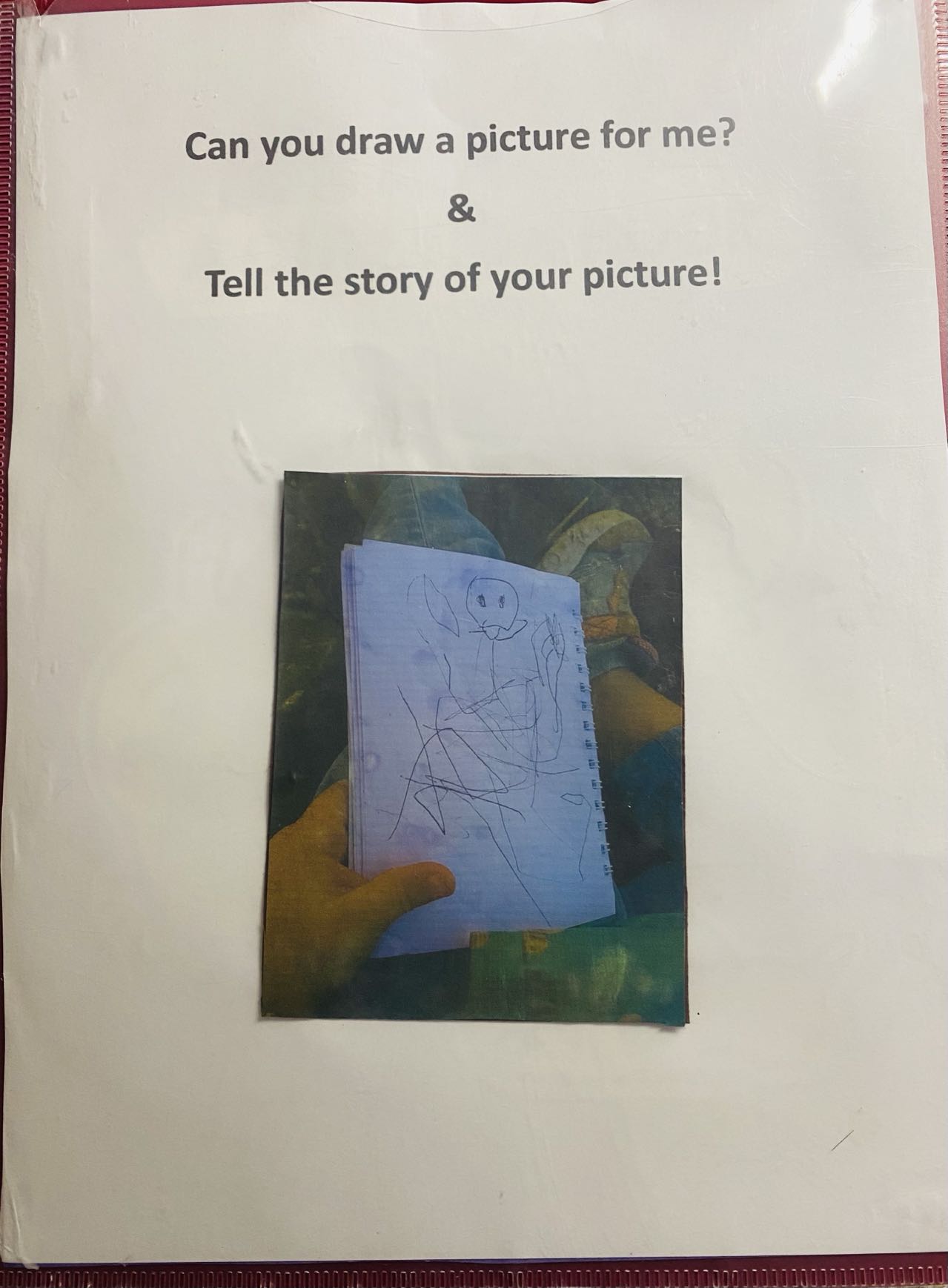
For example, when Matheo accepted my invitation, he filled the page with many tangled lines. When I asked him what he was drawing, he answered in Spanish. I tried to continue the conversation in English, and he responded with a mix of English and Spanish. I did my best to catch his meaning. Eventually, I understood that he was drawing his house, and the lines represented the routes leading to it. Throughout the process, we both found it fun—trying hard to listen and understand each other’s intentions—and when we finally decoded the meaning, it felt like solving a puzzle. We looked at each other and laughed.